
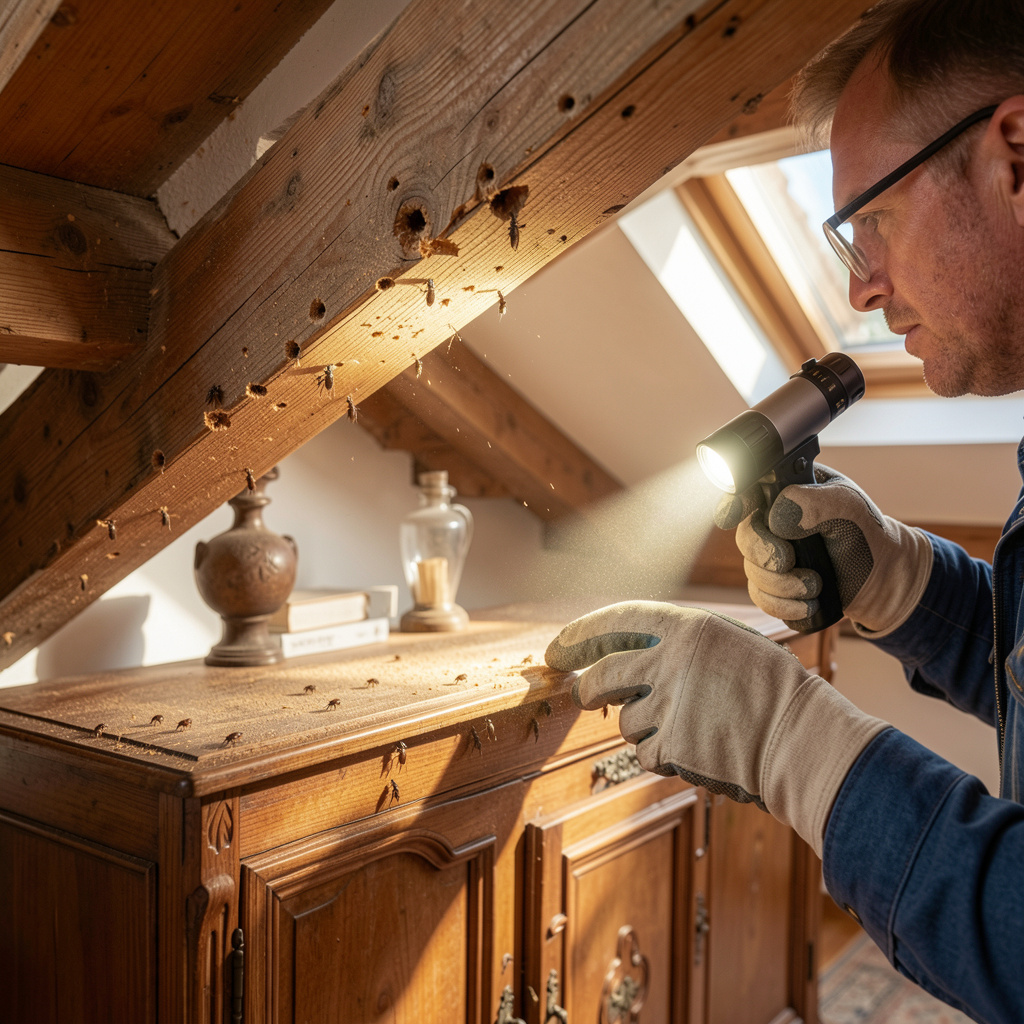
When homeowners discover tiny holes in wooden furniture or structural timber, they often assume they have a generic “woodworm” problem. However, woodworm is not a single insect. It is a general term used to describe the larvae of several species of wood-boring beetles. Two of the most well-known species found in European homes are the Deathwatch Beetle and the Common Furniture Beetle.
Although both insects damage timber, they differ significantly in appearance, preferred wood types, life cycle, habitat, and the level of structural damage they can cause. Correctly identifying the species is essential because treatment methods and the urgency of repairs may vary.
In this guide, we’ll compare the Deathwatch Beetle and the Common Furniture Beetle, explain how to recognize each species, and help you understand which one poses the greater risk to your property.
Understanding Woodworm
Before comparing the two beetles, it’s important to understand what “woodworm” actually means.
Despite the name, woodworm is not a worm. It refers to the larval stage of wood-boring beetles. Adult beetles lay eggs on wooden surfaces, and after hatching, the larvae tunnel deep into the timber while feeding. This feeding stage can last several years before the adult beetles emerge through small exit holes.
The damage caused by woodworm comes almost entirely from the larvae—not the adult beetles.
What Is the Common Furniture Beetle?
The Common Furniture Beetle (Anobium punctatum) is the most widespread cause of woodworm infestations in Europe.
It commonly attacks:
- Wooden furniture
- Floorboards
- Roof timbers
- Ceiling joists
- Doors
- Window frames
Because it is so common, most household woodworm infestations are caused by this species.
Appearance
Adult Common Furniture Beetles are:
- Light to dark brown
- Oval-shaped
- Approximately 2–5 mm long
Their small size often makes them difficult to notice indoors.
Preferred Timber
This species mainly infests:
- Pine
- Spruce
- Fir
- Other softwoods
It can occasionally attack hardwoods but generally prefers softwood timber.
What Is the Deathwatch Beetle?
The Deathwatch Beetle (Xestobium rufovillosum) is less common but often far more serious.
It is primarily associated with:
- Historic buildings
- Churches
- Old cottages
- Heritage properties
- Large oak beams
Its unusual name comes from the tapping sound adults make during mating season, which people once believed was an omen of death in quiet houses.
Appearance
Adult Deathwatch Beetles are:
- Dark brown
- Cylindrical in shape
- Approximately 5–9 mm long
- Covered with fine yellowish hairs
They are noticeably larger than Common Furniture Beetles.
Preferred Timber
Unlike the Common Furniture Beetle, this species usually attacks:
- Oak
- Elm
- Chestnut
- Other hardwoods
It often prefers timber already weakened by fungal decay.
Key Differences Between the Two Beetles
| Feature | Common Furniture Beetle | Deathwatch Beetle |
|---|---|---|
| Scientific Name | Anobium punctatum | Xestobium rufovillosum |
| Adult Size | 2–5 mm | 5–9 mm |
| Preferred Wood | Softwoods | Hardwoods, especially oak |
| Typical Buildings | Homes and furniture | Historic buildings and churches |
| Exit Hole Size | 1–2 mm | 2–3 mm |
| Damage Level | Moderate | Often severe |
| Associated with Damp Timber | Sometimes | Frequently |
| Lifespan as Larva | 2–5 years | Up to 10 years |
Although both species create woodworm damage, the Deathwatch Beetle generally poses a greater structural risk because it attacks large load-bearing beams.
Damage Caused by the Common Furniture Beetle
The Common Furniture Beetle creates numerous small tunnels inside timber.
Signs include:
- Tiny round exit holes
- Fine powdery frass
- Weak furniture joints
- Soft floorboards
- Minor structural weakening over time
While serious infestations can occur, damage usually develops gradually.
Damage Caused by the Deathwatch Beetle
Deathwatch Beetles often attack timber that has already been softened by fungal decay.
As a result, infestations may become severe before they are discovered.
Common signs include:
- Larger exit holes
- Coarser frass
- Hollow beams
- Cracked timber
- Significant weakening of structural supports
Historic buildings are particularly vulnerable because many contain centuries-old oak beams.
Which Beetle Causes More Damage?
In most situations, the Deathwatch Beetle is considered the more destructive species.
Reasons include:
- Larger larvae
- Longer development period
- Preference for structural hardwood
- Frequent association with damp and fungal decay
However, the Common Furniture Beetle should not be underestimated. Long-term infestations affecting roof timbers or floor joists can also result in costly repairs if ignored.
How to Tell Which Beetle You Have
Correct identification often requires examining several factors.
Exit Holes
- Common Furniture Beetle: 1–2 mm round holes
- Deathwatch Beetle: 2–3 mm holes
Frass
Common Furniture Beetle frass is fine and powdery.
Deathwatch Beetle frass is generally coarser with small pellet-like particles.
Type of Timber
Softwood infestations usually suggest the Common Furniture Beetle.
Oak beams and other hardwoods are more likely to indicate Deathwatch Beetles.
Building Age
Older heritage buildings are more commonly affected by Deathwatch Beetles.
Modern homes are more likely to experience Common Furniture Beetle infestations.
Can Both Species Be Found in the Same Building?
Yes.
Although uncommon, both beetle species can infest different areas of the same property if suitable timber types are present.
For example:
- Softwood roof timbers may contain Common Furniture Beetles.
- Oak support beams may contain Deathwatch Beetles.
Professional identification is important when multiple timber types are affected.
How to Prevent Both Types of Woodworm
Many preventive measures protect against both species.
Keep Timber Dry
Repair roof leaks, plumbing problems, and condensation issues promptly.
Improve Ventilation
Ensure lofts, basements, and crawl spaces remain well ventilated.
Treat Exposed Timber
Use appropriate wood preservatives on untreated wood.
Inspect Older Buildings
Historic properties should undergo regular timber inspections.
Address Fungal Decay
Removing damp conditions greatly reduces the likelihood of Deathwatch Beetle infestations.
When Should You Call a Professional?
Professional assessment is recommended if:
- Structural beams show signs of weakening.
- Fresh frass continues appearing.
- New exit holes develop each year.
- Multiple areas of timber are affected.
- You suspect a Deathwatch Beetle infestation.
- You’re unsure which beetle species is present.
A qualified timber preservation specialist can identify the insect, assess the level of damage, and recommend the most effective treatment.
Common Myths About Woodworm Beetles
Myth 1: All Woodworm Is the Same
False. Different beetle species have different behaviors, preferred timber types, and levels of destructive potential.
Myth 2: Bigger Exit Holes Always Mean More Damage
Not necessarily. Larger holes may indicate a different beetle species rather than a more severe infestation.
Myth 3: Only Old Houses Get Woodworm
Incorrect. While historic properties are more vulnerable, modern homes with damp or untreated timber can also become infested.
Conclusion
Although both the Deathwatch Beetle and the Common Furniture Beetle are responsible for woodworm infestations, they differ in important ways. The Common Furniture Beetle is the most widespread species and primarily attacks softwood furniture and structural timber, while the Deathwatch Beetle prefers older hardwood beams, particularly those affected by damp and fungal decay.
Recognizing the differences in appearance, preferred wood, exit holes, and damage patterns can help homeowners identify the problem early and choose the right treatment. Regular inspections, moisture control, and professional advice remain the most effective ways to protect your home from long-term timber damage caused by wood-boring beetles.Further Reading: https://www.shashel.eu official site for microwave woodworm treatment equipment.